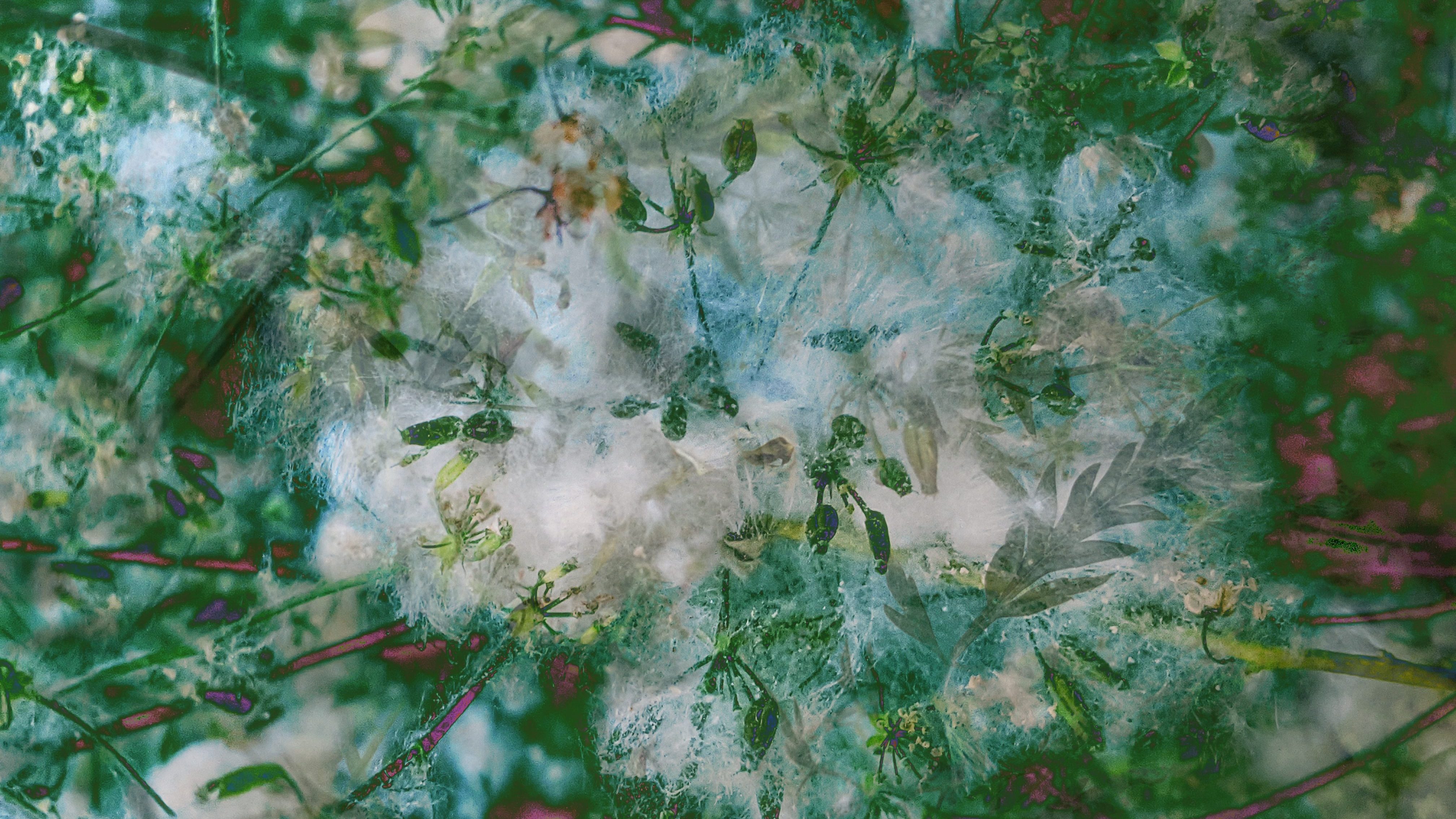
Inge van Heerde is a Dutch artist, art-teacher, and mother of two young children. Her photography takes the viewer on an introspective journey where themes such as motherhood, femininity, and fertility remind us of our own creation power.
There’s a mythological quality to her work that evokes memories of a primordial Mother and ancient cosmologies. Yet her photography also conveys a vulnerability in which the complexities of the human psyche are expressed through the female body.
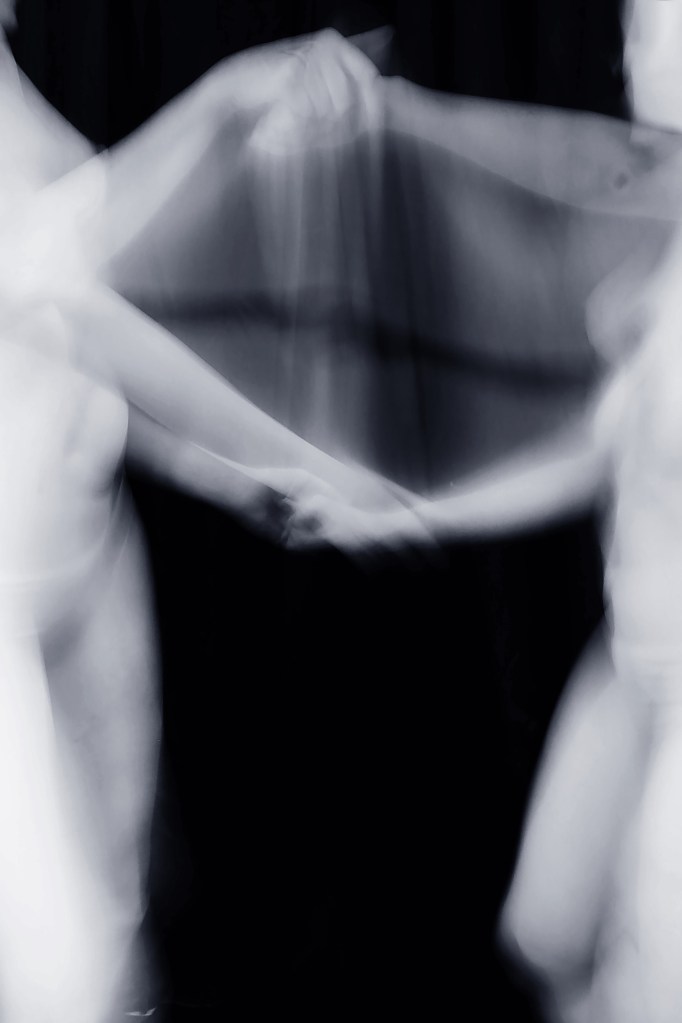
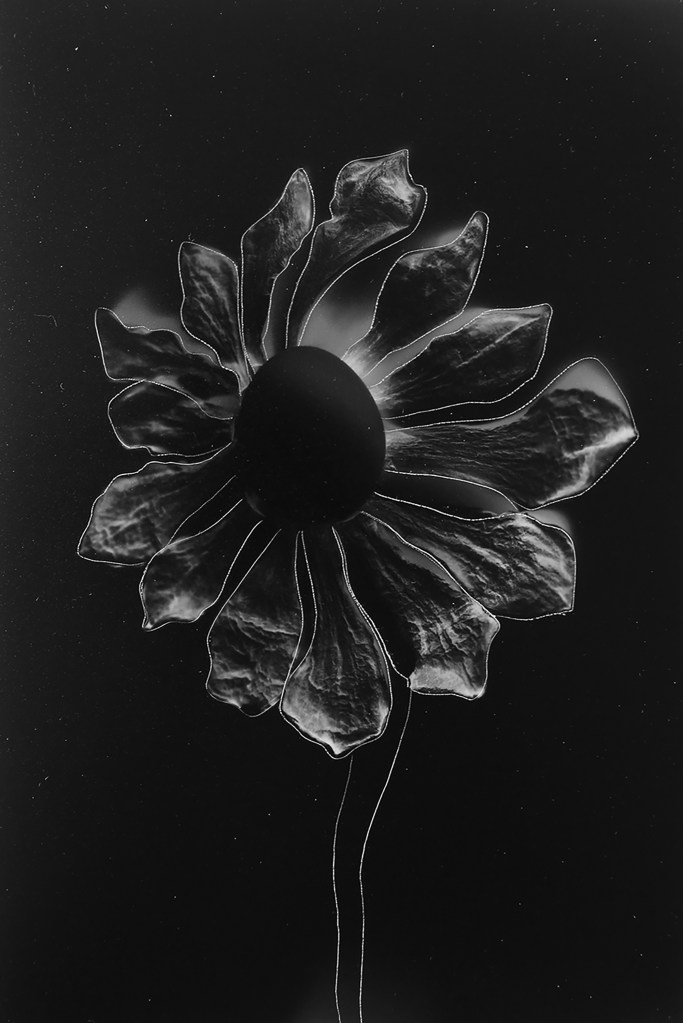
Inge’s artistic method emerges from a desire to embody the creative process. She prints her photography and then proceeds to alter and manipulate the images with scribers and sandpaper, adding lines and textures. She experiences this repetitive manual labor as a meditative exercise.
Yvet spoke with Inge in her studio about her relationship to her art and her role as an artist in today’s world.
(2024)
Y: Your images inspire a sense of awe and wonder in me. What kind of mystery hides behind them and what do they want to tell us?
I: I very often use the imagery that comes to me during meditations. That imagery then show up in new work. Through meditation, and an intuitive creative process, I gain insights about what is going on within me. My images function like a type of journal for me. It’s often in hindsight, after they are done, that I understand their meaning. There are clear themes that emerge from the work, such as womanhood, femininity, motherhood, how to deal with boundaries, and relationships between women.
Through this creative process, I began realizing that the imagery that comes to me in meditative states seems to be connected to a universal language. Imagery that many people encounter, like certain visions and symbols. I seem to tap into a language that already exists. Without being consciously aware of speaking that language.
Y: That sounds like you are diving into imagery from a collective unconscious. What kind of symbolism do you encounter there?
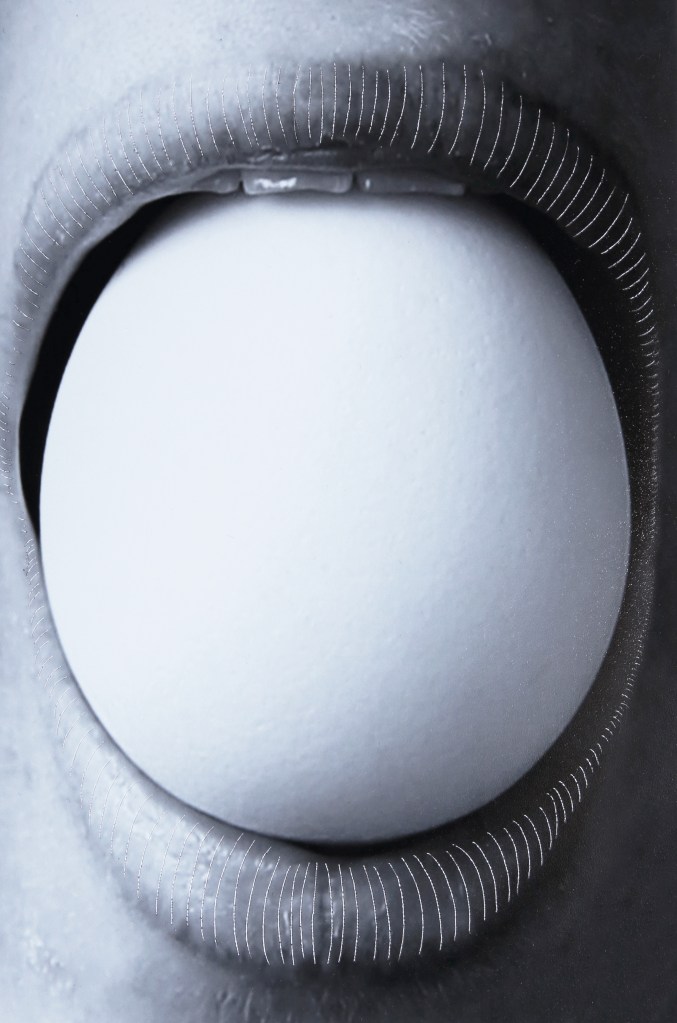
I: I often come across symbolic imagery like the egg, for example. These images are usually very powerful. Once I saw the image of a golden egg in my hand. And funny enough, after seeing the golden egg in a meditation, I talked to my sister, and she said she had encountered similar imagery during her meditations. The egg was also an important image to her. So, I went to the library to research symbolism in different cultures. We know the egg as a symbol during Easter and spring representing new life. There are various cultures where the egg has significant meaning.
Y: Yes, one of my favorite paintings is by Emil Bisttram called Cosmic Egg Series No. 11 . The Cosmic Egg is a very old symbol that appears in many ancient cosmologies, having to do with the birthplace of all of creation.
I: Yes. I love that. Some images, like the wolf, return to me often, but I figured that was too complicated to photograph. I have thought about using my sister’s dog…
Y: I have encountered wolf imagery as well. I had a fever dream a few years ago where wolves kept appearing with messages. They were super vivid. But yes, more challenging to capture on camera than an egg. You also very often use the female body as a recurring theme in your work. Is there some symbology behind that?
I: There is a softness about the human body to me. But I also see the female body as a very powerful vessel, or form. I am always looking for connections between the body and the Earth, or the body and the Other. I have a female body, and I create from that place. I use my own body as a field of research. In my creative process I make use of performance. I bring my body, or the bodies of others, to specific locations and settings, with the goal of gaining deeper insights about myself. That helps me to better understand underlying questions I may have. This is specifically about the female body, as opposed to the male body, which is still used as the norm in our society. I want to center the female body. Not as something that’s being sexualized, but as a body of matter that is capable of so much, and, at the same time, is so often taken for granted, or neglected.
That embodied element also comes back in the way I alter my images after I’ve printed them. I make them my own by adding lines and scratches, it’s a very meditative process. I actually touch the images. This method gives me the opportunity to physically engage with the imagery. It also helps me get away from a sense of perfectionism in shooting the photos. It allows me to experiment, because I know I will still be altering the images anyway, so nothing has to be perfect in the first shot. That method adds more layers and more meaning to my work. It has become my signature.
(2023)
In using my own body in my work, I’ve experienced some magical moments in the creative process. With the egg for example… I used a raw egg. And as I had that raw egg in my mouth, I entered a meditative state. I had to concentrate on keeping my jaw totally relaxed, not tensing up or biting too hard, because that would break the egg. I had to sit in a specific posture that forced me to become very calm.
Y: You were just talking about connection. In a way you were connecting very intimately to the essence of that raw egg. In a situation like that you have to bypass the mind, and be totally present in that moment.
I: You know, I very recently found out that there is this image made by another artist of a woman with an egg in her mouth2. At first that made me feel uncomfortable, almost as if I had stolen something, but I had never seen the image of heard of this artist before. And then I thought: maybe this is a testimony to the power of those symbols. This idea that there in a universal image bank in people’s psyche’s that we all have access to. Even if we have gotten estranged from it, or choose to ignore it. That’s very interesting to me. I could quickly see that we are working with similar imagery. I don’t know if her work is also inspired by motherhood, I still have to research her further.
But, yes. When I work, I usually don’t plan very much beforehand. Things simply happen or appear when I open up to the creative process. I have to trust that little creative flame. I think that flame is there for many people, it is available. But it does require us to have space for it, or to make space for it, to decide that you find it important to do so. As a teacher, I often notice a type of fear in my students that sometimes prevents them from creating freely.
Y: What do you think that fear is?
I: I think it’s an anxiety around what their peers might think of them. A fear of creating something original. Because something original is also often strange. It requires you to step into the unknown. It takes time to shake off that fear of the unfamiliar. I feel like I am no longer afraid of the unknown. One of the biggest unknown purple-black holes I have ever encountered was the birth of our first child. That was truly an unfamiliar void. But not the type of void that leads to an abyss, more like an enormous new experience, and you simply have no idea what it will be like. For me, that felt as if we were consciously inviting the unknown.
Y: Your images, they way I see them, point us towards that unknown, and to that unknowable inner world. That world might be slightly different for everyone, but also, in its layerdness, interconnected. What do you think the role of the artist is on that journey? What is your role?
I: I do try to tell a story with my art. I always find it important that people experience something for themselves, and that they themselves give meaning to that experience. It’s crucial for me to know that this inner world is a world that can heal. You can get to know yourself, for real. I think that requires us to stand still.
Everything moves so fast these days. As soon as we don’t know something, we look the answer up on the internet. We rarely take the time to think for ourselves first. Or if something doesn’t work immediately, it’s quickly deemed impossible and abandoned. But, by truly standing still, through meditation, or through writing, or creating, or engaging with art, we learn there’s still a whole world to discover. I think there’s so little room for that in this culture, and that’s really sad. Standing still is necessary. I was sitting in my studio a while ago, getting doubtful about why I even have this studio and why I create in the first place. But immediately, I felt which such clarity that having this studio is incredibly meaningful to me.
Y: What does this place represent to you?
I: It symbolizes space. Physical space as well as inner space. Room to focus on what is moving inside of me without being distracted by everyday obligations. Here, I don’t have to do anything. Not that I don’t hope something happens. I feel a sense of freedom here. I know my interest is here. To dive into my inner world. I do frequently experience a sense of awe.
Y: Where do you experience that most at the moment?
I: Mostly in the miracle of life itself. I also feel it at home in raising my children. Being a witness to them growing up. What they are learning. But also, in recognizing a resilience in myself. I have to sacrifice parts of myself for the sake of my children. My own ways of doing things are irrelevant in the face of their needs. Sometimes that takes getting used to. I am often good at it, and sometimes I am not. But the resilience you need for that process amazes me.
(2023)
In the last years I have mostly been working with black and white photography. That really began when I became a mother. I’ve been thinking about that, and I suspect it has something to do with the fact that I have to make decisions faster, so things become more black and white in my way of thinking. Mostly because that’s easier and it takes less time. I think it also makes my images more powerful. But recently I have been adding red to my photos. Red symbolizes a sense of power and it represents feminine energy to me.
Y: It’s a new chapter.
I: Yes. But I shouldn’t think about it too much. I just have to continue creating from a place of trust. Whatever I am moving through will reveal itself in the images. I do believe it’s important for us to focus more on the feminine. I think we all have both masculine and feminine traits in us, as human beings. I would love to see a sense of worthiness restored to feminine qualities. For us to look after each other more, to care for each other, to collaborate. I would want those values to be esteemed more than money, power, competition, and success. I hope that someday, hopefully, we manage to turn that around. Meanwhile I will center that femininity in my work to bring it to our attention.
All images shared in this post, including the thumbnail of the work Where is the flux star, no. 3, 2017, belong to Inge van Heerde. More of Inge’s work as well as her contact information can be found on her website: ingevanheerde.nl
Know that it supports artists when you buy, share, or plug their work if you feel so inspired!
[This conversation was held in Dutch, translated to English by Yvet Youssef.]
References:
If you want to be notified when we post new pieces on Metaphysical Mulch, subscribe here, and confirm your e-mail address in your inbox:
 Metaphysical Mulch